This is a revised version of an essay originally published in Journal of Visual Art Practice in 2015, in which I consider a number of video works made by Jamie Jenkinson using an iPhone 5. The discussion centres around the visible interactions between the technology – lens, file formats, codecs, resolution, etc. – subject matter and the way the camera is moved. The imagery generated by these interactions often exhibits aberrant effects, such as uneven blur, which point to the limitations and determinations – the specificity – of the technology. (These ideas form the basis of Jenkinson’s PhD project, completed at Lancaster University in 2020)
Jenkinson’s1 series constitutes a body of genuinely experimental works that are, however, underpinned by understandings about visual parallax, and which knowingly exploit the characteristics and shortcomings of video recording media: frame size and rate,bit rate and depth, file formats and codecs. Much of the videos’ imagery separates itself into two or more distinct layers, depending on the scene and the disposition of objects within it. Most of them also refer to, figure, or otherwise exploit the scanning processes involved in the formation of video images, and in some cases, such as Spiral Staircase (2013) refer back to film technology, with its step-by-step presentation of a series of individual frames.
Film and photographic processes are also referenced in titles, such as Shutter (2013) discussed below, and in at least one work, e.g. Fans on Floral (2013)
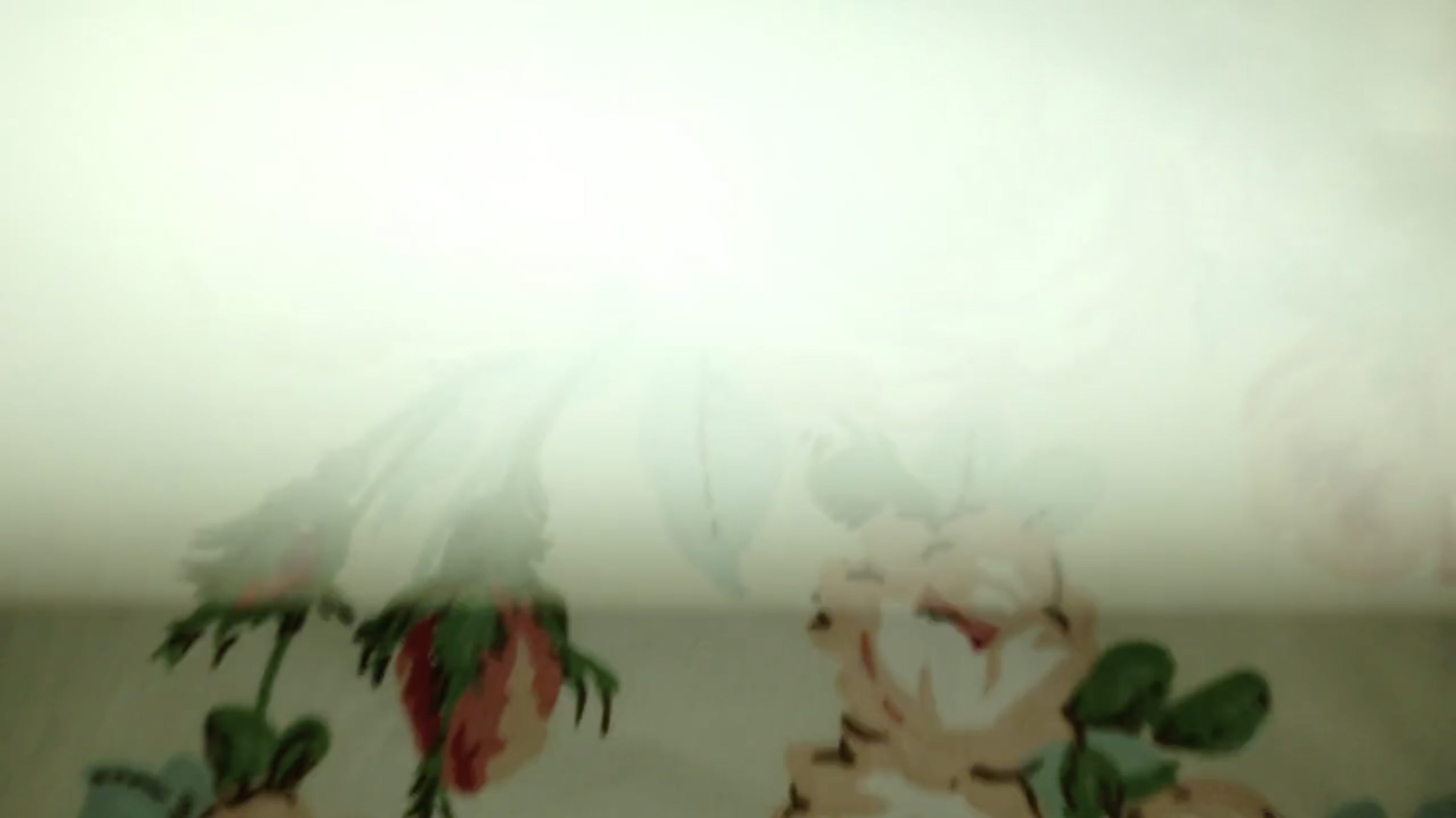
the subject is filmed through a spinning fan, breaking up the image in a manner akin to the way a film camera’s shutter closes between frame movements, so as both to preserve the stability of individual frames and to conceal the movement of the film through the camera.This latter process has historical precedents in John Smith’s 16mm film Blue Bathroom (1978–1979)
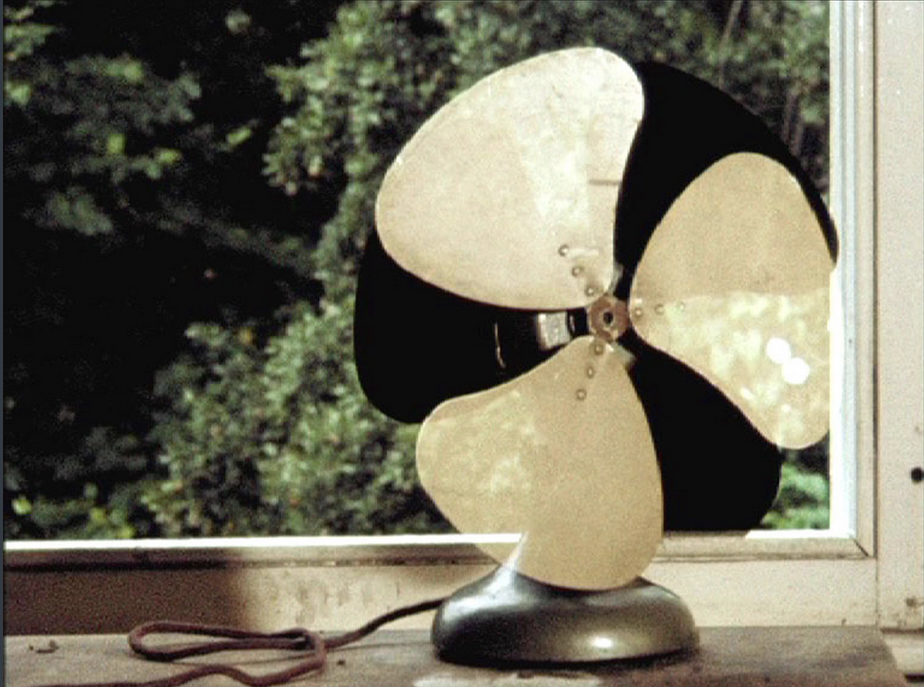
and in Ken Jacobs’ series of Nervous System films (1994 onwards) and is fundamental to the way an illusion of movement is sustained. However, in Blue Bathroom the fan, which is wholly visible in the shot, is used as part of a negative–positive printing process, while in Jacobs’ films, where the fan blade is rotated slowly to control the individual presentation of successive frames of film, it does not form part of the on-screen image. In Jenkinson’s work, by contrast, the fan blades function as a mechanical shutter, clearly visible, in front of the digital camera’s own electronic scanner. The effect is similar to many of his other videos, which is to generate two distinguishable layers of imagery that interact, and which function both qua image and as the explicit visualisation of their generative means, so that a technical process presents – not represents – itself, as imaged within the work, as it does its work on the image.
Digital camcorders do not have a mechanical shutter. Rather, the shutter is a function of the moment when light hits the chip, while speed is adjusted by electronically varying the amount of time the light sensitive charge coupled devices (CCDs), behind the lens are allowed to build a charge, within the standard (UK) video frame rate of 25 frames per second (fps). The CCDs, which form the rectangular chip – analogous to the celluloid film in analogue cameras – that gathers the light from the lens, have now largely been replaced by complementary metal oxide semi-conductor (CMOS) chips in most camcorders as they are cheaper to manufacture and use about one thousandth of the power of that consumed by CCDs.2 However, like so many digital devices or functions (and their nomenclatures) that are modelled on their analogue precursors, the ‘Rolling’ shutter, common to digital cameras with CMOS chips, functions in an equivalent manner to that found in a film camera, which consists of a rotating disc with a triangular aperture cut out, like a pie with a slice removed. As the opening sweeps across the film it is exposed to light. In the digital equivalent, the chip is activated from left to right and top to bottom, which forms a slightly diagonal sweep that lasts about 1/50th of a second, similar to its analogue forebear, except that whereas the film camera’s sweep is rotational, the video camera shutter’s is for the most part diagonal, since the two edges of the slice are only parallel with the horizontal edges of the frame at one moment.3
The pie-slice movement is exactly figured in Spiral Staircase. The camera advances up a cast iron spiral staircase, step by step, recursively figuring the manner by which film advances through a camera/projector. The staircase’s structure is given, and is formed from identical units, whereas Jenkinson’s movement up it exhibits small variations from step to step, again in the manner of film frames, which are formed from identical rectangles within which the image typically changes slightly in each one. At a certain point one’s visual sense – one’s ‘seeing as’ – of the image shifts from being that of a point of view shot of a person, to that of a diagonal array sweeping erratically through the frame. (Thereby enacting a perceptual shift that has been most eloquently articulated by Tony Hill4 in his Short Historyof the Wheel (1992) in which, because of the way the camera rotates with its moving subject to hold it static in the frame, it is the ground that rotates about the wheel rather than vice versa)
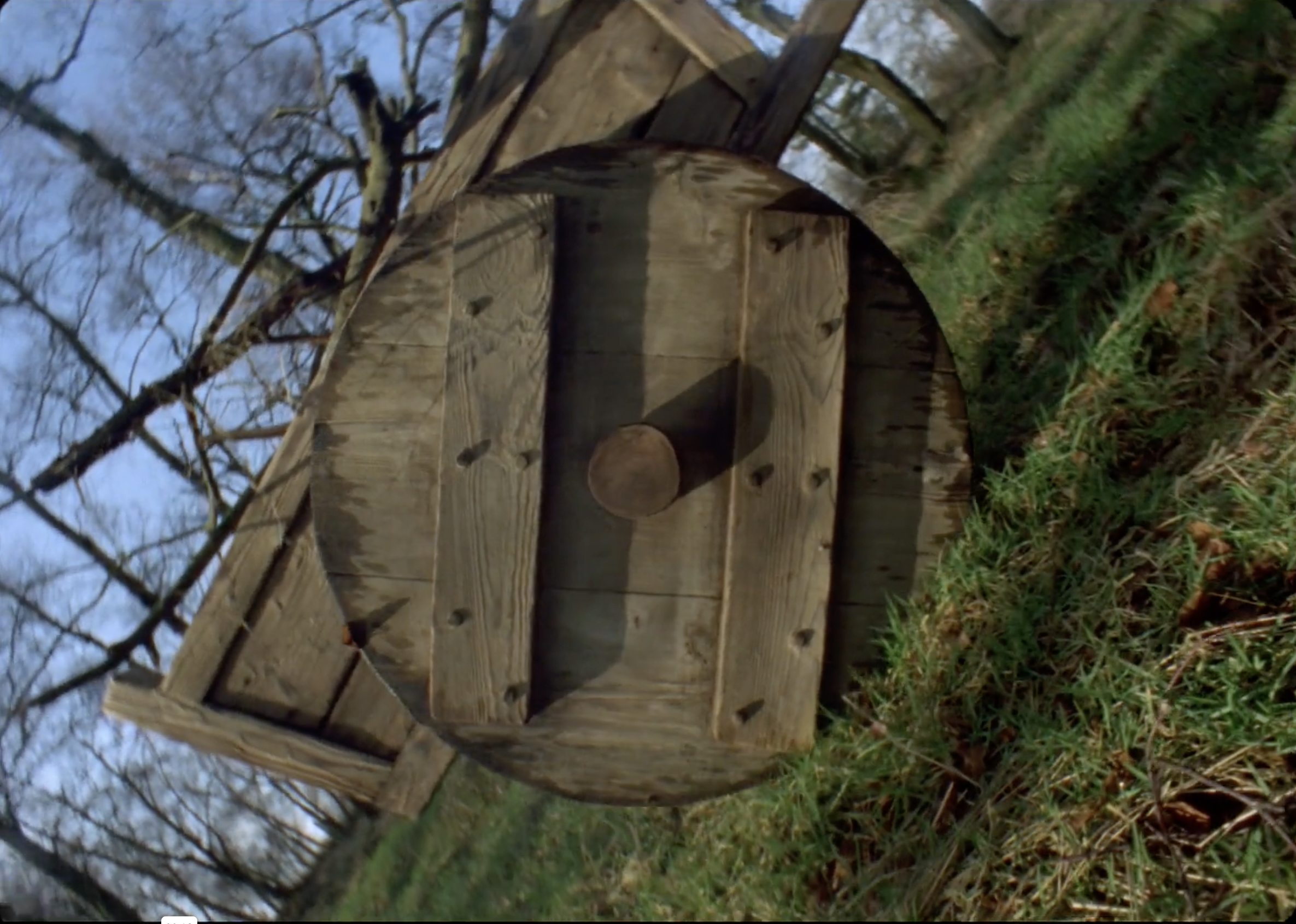
Spiral Staircase also exhibits a number of characteristics – ‘artefacts’ in the technical language – that are common to many of Jenkinson’s videos, the most obvious ones being blur and skew. The image spins past our eyes, as a blur, but we are nevertheless aware of the forms that underpin the blur: they cannot be seen clearly but they are clearly there. This again gives rise to a sense of two layers to the image and although the effect is not as striking as in some of the other works, in which blur is generated by deliberately swiping the camera in rhythmic movements across the subject, it nonetheless conveniently raises the question of what we are really seeing, and of course what the camera is really recording and how.
Blur is necessary to realistic-looking moving images, specifically images that desire to simulate human vision, as most movies in some respects aim to do, but at the same time it threatens their legibility, and this understanding is central to Jenkinson’s modus operandi. It is well known that animators add blur to what are otherwise sharp drawings in order to render them more realistic. In filmed material blur is an effect of shutter speed and frame rate, both of which can be altered independently of each other, within limits. Faster shutter speeds eliminate blur but beyond a certain point this gives way to a strobing effect that equally draws attention to the medium’s functioning. Strobing occurs because we see a rapid sequence of sharp images where in nature we would see equivalent things as continuous and blurry. Strobing also affects the apparent continuity of motion because the shorter the shutter speed, the longer the time gap between frames, and the faster the moving object the greater the difference between one frame and the next. All this occurs at a normal frame rate of 25 fps (25 time slices of about 1/50th of a second each), but the very small durations involved and the minimal differences between them can have a dramatic effect nonetheless.
Having said all this, there is another aspect of Jenkinson’s methods that is crucial to its appearance. All the works are made with a handheld camera, and the recording procedure is different in every case. The action of mounting a spiral staircase is, like the film’s movement though the camera, intermittent: the placing of a foot on a step occasions a stationary moment, followed by the body’s movement upwards as the alternate leg aims for the next step. This stop-start moment is reflected in the video, which has correspondingly sharper and blurrier moments. Additionally, the camera has a certain amount of independent free movement, since arm movements are only partially determined by those of the legs. The result is that small areas of the individual frames appear momentarily sharp, against a general sense of overall blur.
Logically, the areas with the smallest amount of rotation, i.e. those nearest the centre of rotation, and therefore the slowest moving, should appear least blurred, but, surprisingly, this is not the case. Whereas these differentials of movement occur across a single plane, in many of the works the differentials are through or between planes, that is, from front to back, from the camera lens to infinity, in the manner of the parallax commonly seen from a train window, in which distant objects apparently move more slowly than near ones. (The effect is brilliantly explored by Guy Sherwin in his 16mm film Night Train (1979), in which time exposures trace the passage of lights in the landscape across the film frame. Nearer lights draw longer lines, whereas distant ones form shorter dashes and dots. Night Train is a perfect example of a mechanically created photograph: a drawing made by light).
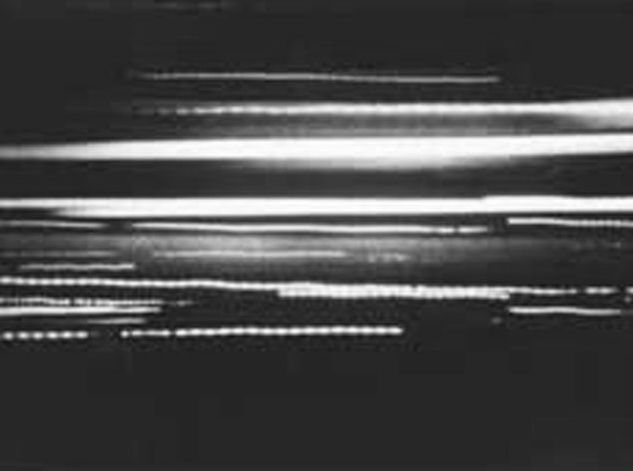
The shift in seeing-as that is prompted in Spiral Staircase occurs in a different form in Obscured Windy Scene (2013)
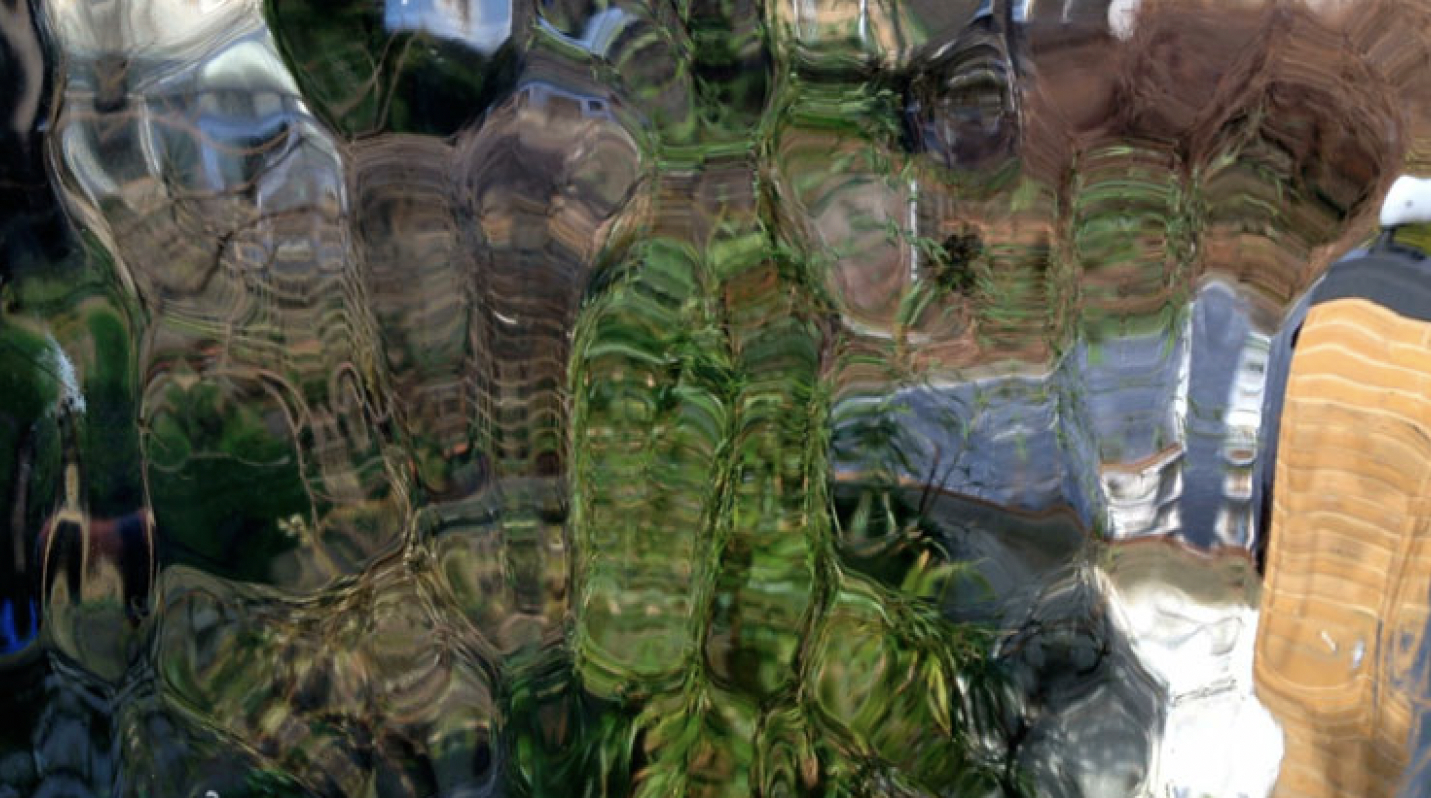
Here the subject, trees blowing in the wind, is filmed through patterned glass. The image is doubly mediated, first by the camera and second by the glass, which functions as a compound lens. Initially we peer through the distorting glass to discern the turbulent foliage blowing in the wind. In a second sense, one that requires the gestalt brought to the first kind of viewing to be overridden, the lozenge shaped areas of glass can be seen as irregular phials containing coloured liquids that move up and down inside them. Each is a video within a video, and once one sees them as such, the image no longer seems distorted, because it has become a self-contained abstract work – it is what it is. Hence ‘distortion’ comes to be seen as such only in the context of a normative concept of representational imagery: it is an instrumentalist, ideological term, not an empirical one.
Video ‘Smear’ is a kind of afterimage, in which rays from bright light fall directly onto the chip, overloading the pixels (there is another analogy here with human vision, in that the rhodopsin in the rods and cones on the retina, which form a fixed array not unlike a pixel grid, become temporarily saturated, and therefore unable to function, when overexposed to light). Smear is more often seen in cameras that use a CCD sensor and a global shutter, which exposes the whole chip in a single flash, but is in any case a key feature of Silla en Balcón (2013)
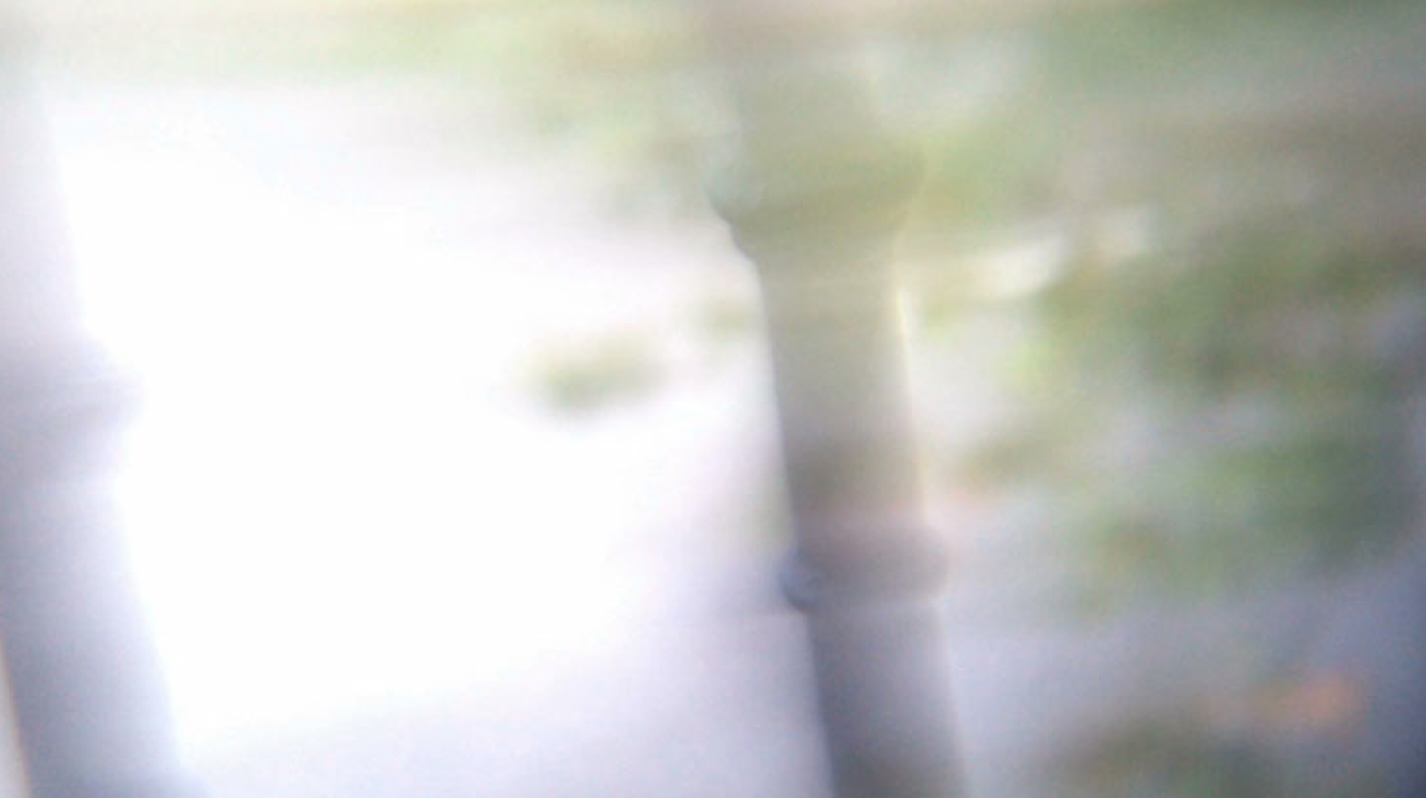
which exploits this deficiency to create a tracery of light lines that float in the layers of blur in the foreground and background, which latter is kept out of focus. The shallow plane of focus allows Jenkinson to isolate the lines from the background. The foreground objects that generate them are blurred, and hence separated from them, partly through the rapid camera movements (there is a difference between movement-generated blur and defocus). The lines seem to persist by virtue of their relative brightness alone, even though they remain to varying degrees attached to that which generates them. While the creation of two or more planes is effected by rapid hand movements, in other works the layering is formed through structural procedures from the outset. Shutter effects this process even more explicitly, through rapid back and forth camera movements across a metal concertina shutter, such as those found at closed tube stations or as anti-burglar devices in houses.
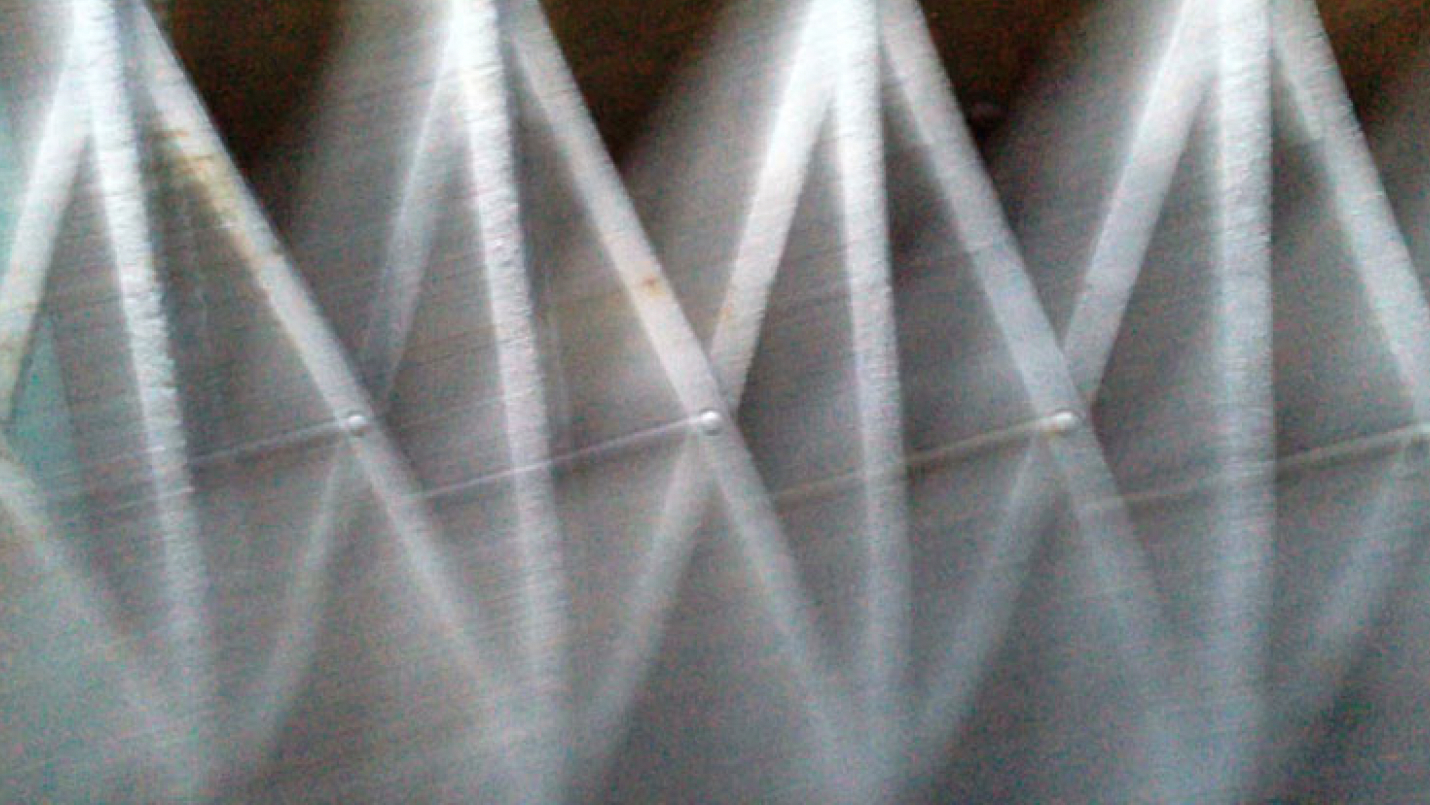
The repetitive pattern and the work’s title again refer to film technologies and processes. The rapid movements of the camera generate distinct virtual lines from rivets in the shutter rods, which connect the rods to form a composite grid from real and apparent/virtual elements within the frame. In a number of other works layering is explicitly structured in, as opposed to being an effect of certain camera procedures. In Two Kitchen Pans (2013) the whole piece is re-filmed off a computer monitor, which imparts a layer of moiré pattern that remains distinct from the footage throughout the piece.
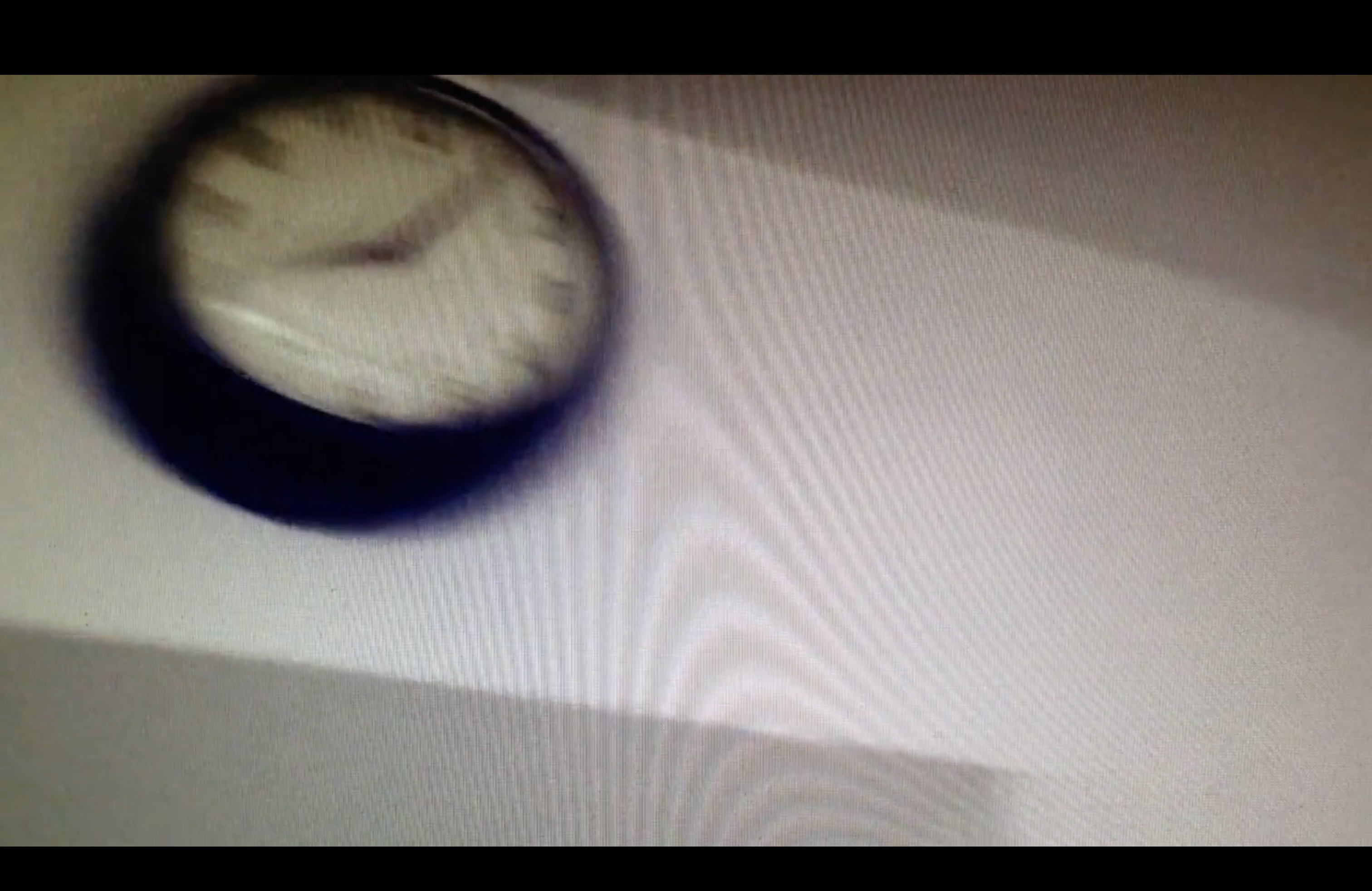
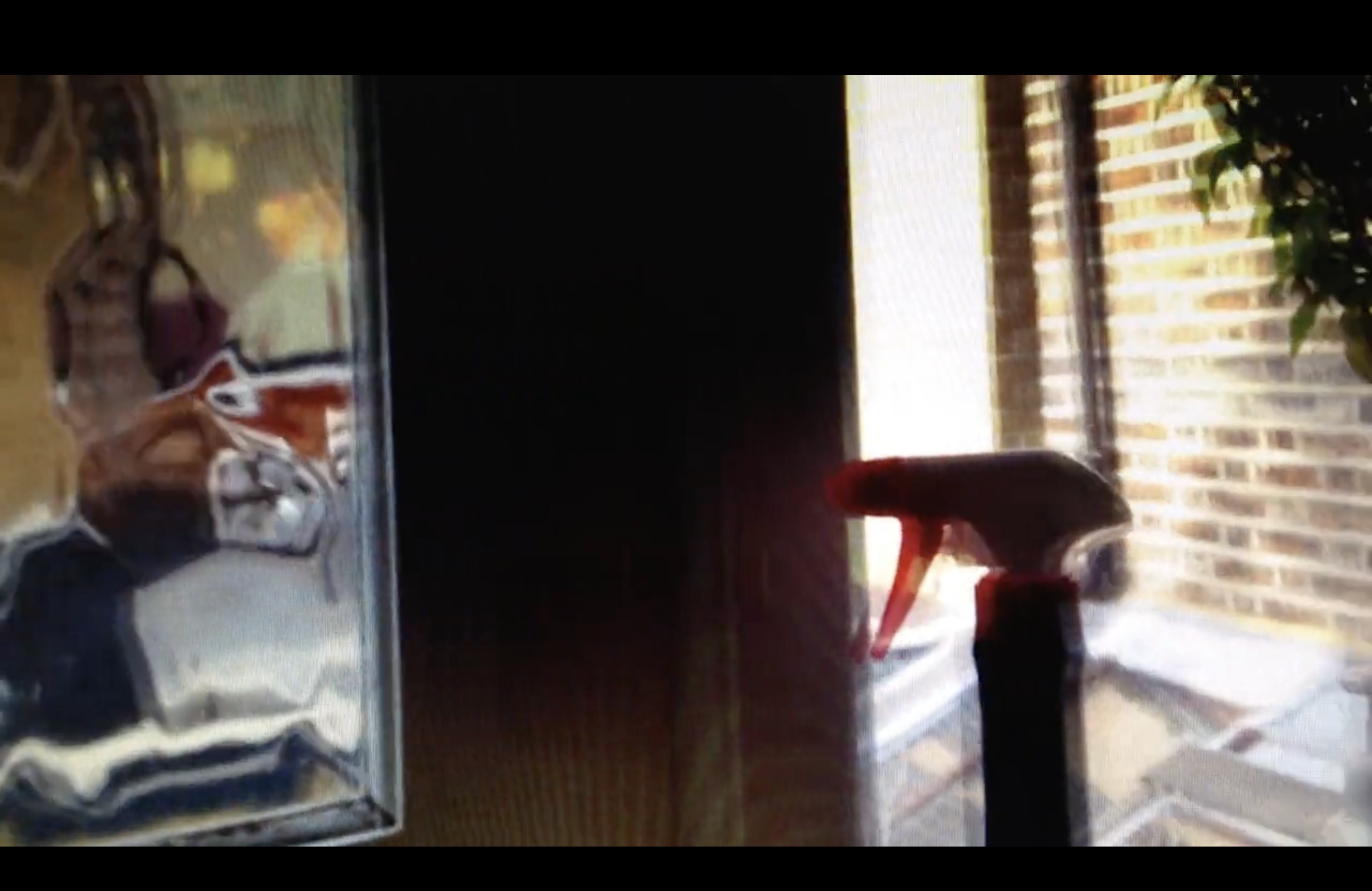
Two continuous camera pans around a room, shot at different times of day, are intercut into short sections so that the flow is interrupted. The scene includes bottles, shelves, potted plants, a clock and a door with patterned glass panels very different to those seen in Obscured Windy Scene. Each segment of pan overlaps with its predecessor, and because of the way they have been made it sometimes seems as if there are three pans not two.
This disruptive strategy generates a number of imponderables that productively obstruct an easy reading of the work, turning it into an undermining of seemingly straightforward representations. Jenkinson says of the work:
‘The video is not so much a series of “shots” but two videos opened in Apple Mac’s “Preview” software, and I am tapping the down arrow to flick between the two videos, which keep their respective time stamps. The first frames slightly reveal this, and there is a subtle tapping sound’6.
It thus becomes very hard to tell if one is seeing previously seen material from a different starting point or an exact repeat of a given segment, as sometimes appears to be the case. It is also not clear whether the cutting occurred in the original construction or in the process of rerecording. These are the work’s epistemological challenges. Layering occurs in at least two ways. First there is a sense of bi-temporality, an implied or virtual layering indicated by the intercutting through which repetition is created. Second there is the re-recording off the screen, which creates the persistent moiré pattern that floats over the space of the image – a picture plane within the picture plane as it were. The fact that the pattern does not change throughout the work does not mean that in-camera cutting did not take place during re-filming, because the pattern would not move if a tripod or similar was used. In Peter Gidal’s Room Film 1973 (1973) the second six-seconds of a 12-second shot of details of a room is repeated for 6 seconds.
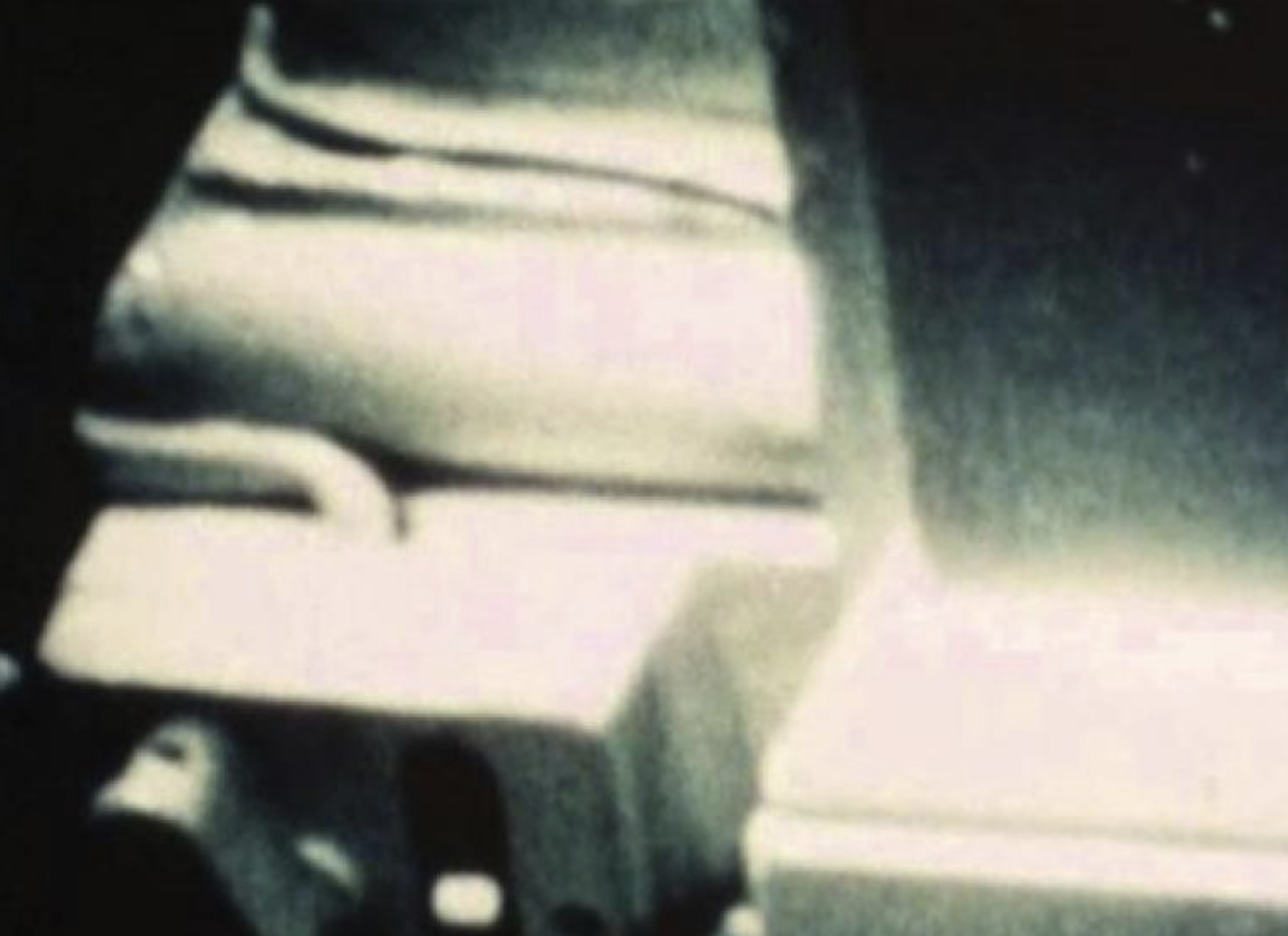
It then continues unbroken for a further six seconds. This further six seconds is then itself repeated and extended for a further six seconds and so on. The film’s absolutely regular structural pattern focuses attention on what we can learn about what we think we have learnt from the first appearance of a shot and then from its repetition.
Two Kitchen Pans owes something to Gidal’s seminal film -an acknowledged inspiration to Jenkinson- but here the cognitive struggle turns on the extent to which we think we may or may not be seeing exactly the same thing again, where and when the selections took occurred, whether the repetitions were generated before or during re-filming etc. What both works have in common is their refusal to satisfy the viewer’s desire for epistemological security. Underlying all the various technologically inflected formal strategies in this work is, of course, the nature of the camera in its ‘normal’ functioning mode. The camera’s recording parameters are the given, framing layer, responsible for the particular qualities and shortcomings that generate the work’s effects, in combination with the various filming strategies employed, which most of the time are specifically intended to test the device’s limitations: the work is in this sense always pushing at those limitations so as to force them into generating something unexpected; this is the key sense in which it is experimental.
The iPhone 5 offered two video file formats, which pertain to how data are stored; MPEG-4 and Motion JPEG, and the H264 compression codec. The ‘codec’ (an abbreviation of ‘compression-decompression’) allows a file to be reduced in size for recording, storage and distribution and then decompressed for display. H264’s degree of compression, and hence quality, can be varied in the same way as a JPEG’s can in Photoshop. It is typically used for compressing video for Internet streaming, and, for example, is the codec recommended by Vimeo for loading videos there. Compression is intended to reduce file size without unacceptably compromising quality5 but there is always a trade-off between the two: within given settings, the price for a higher data rate will be lower quality and vice versa.
The iPhone 5’s ability to capture footage, its data rate, is about a 10th of what a high-end HD camcorder is capable of, and it is partly this limitation that allows for the generation of artefacts that typify Jenkinson’s approach. The piece that most explicitly focuses this is Cabinet 1–86, presented as the final piece at his Royal College of Art graduation show in 2013, and which consists of a large wooden box with eight small holes in it. Behind each hole is in most cases a simple kinetic sculpture. For example, ‘Hole 2 – Fan spinning black and white zigzag pin stripe pattern with flourescent strip light. Hole 5 – Portable TV displaying static. Hole 6 – Marco lens on a rotating hanging basket with flowers and incandescent light’7In order to view the work, the spectator is required to place their camera – phone’s lens over a small hole.
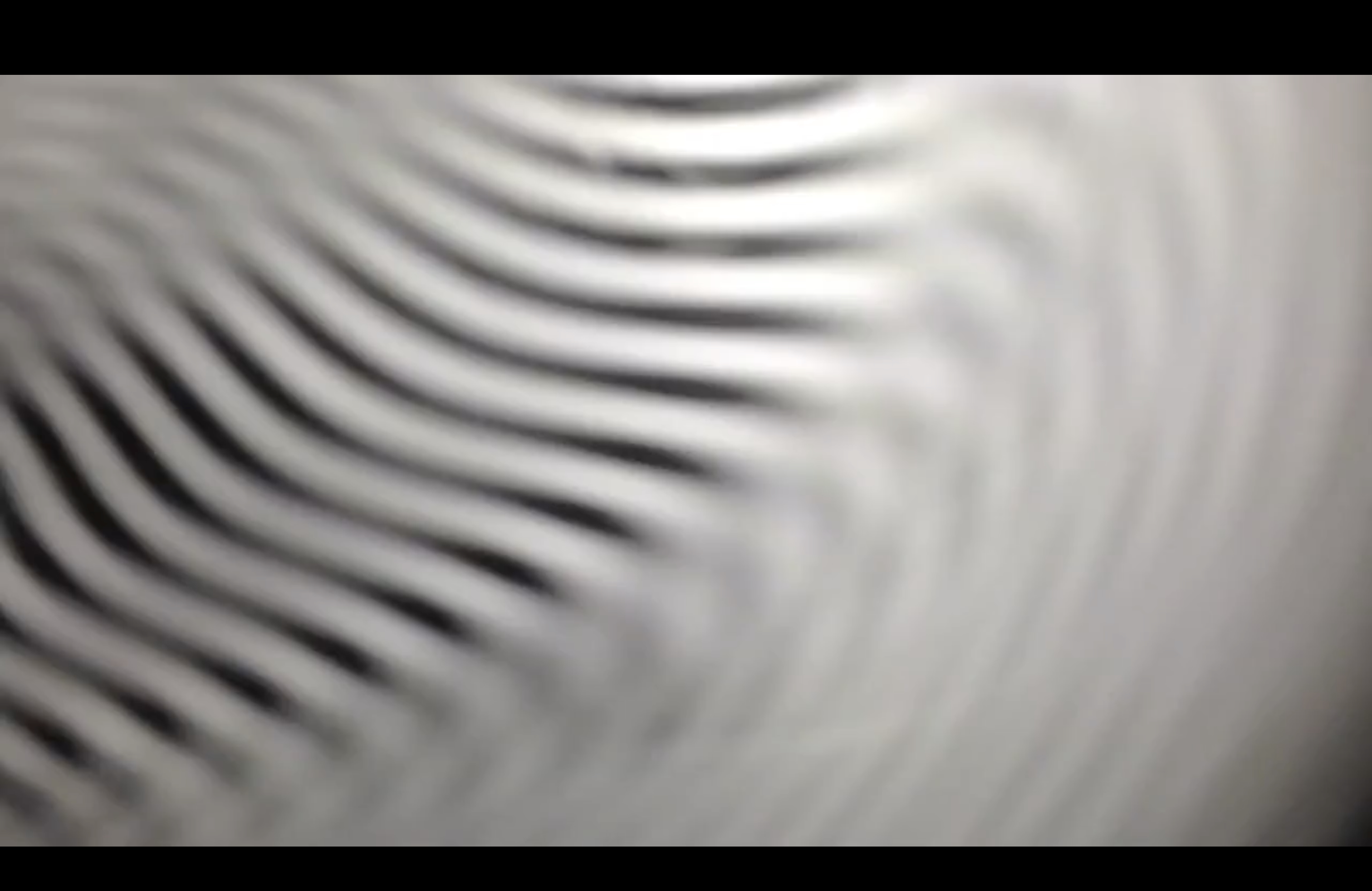
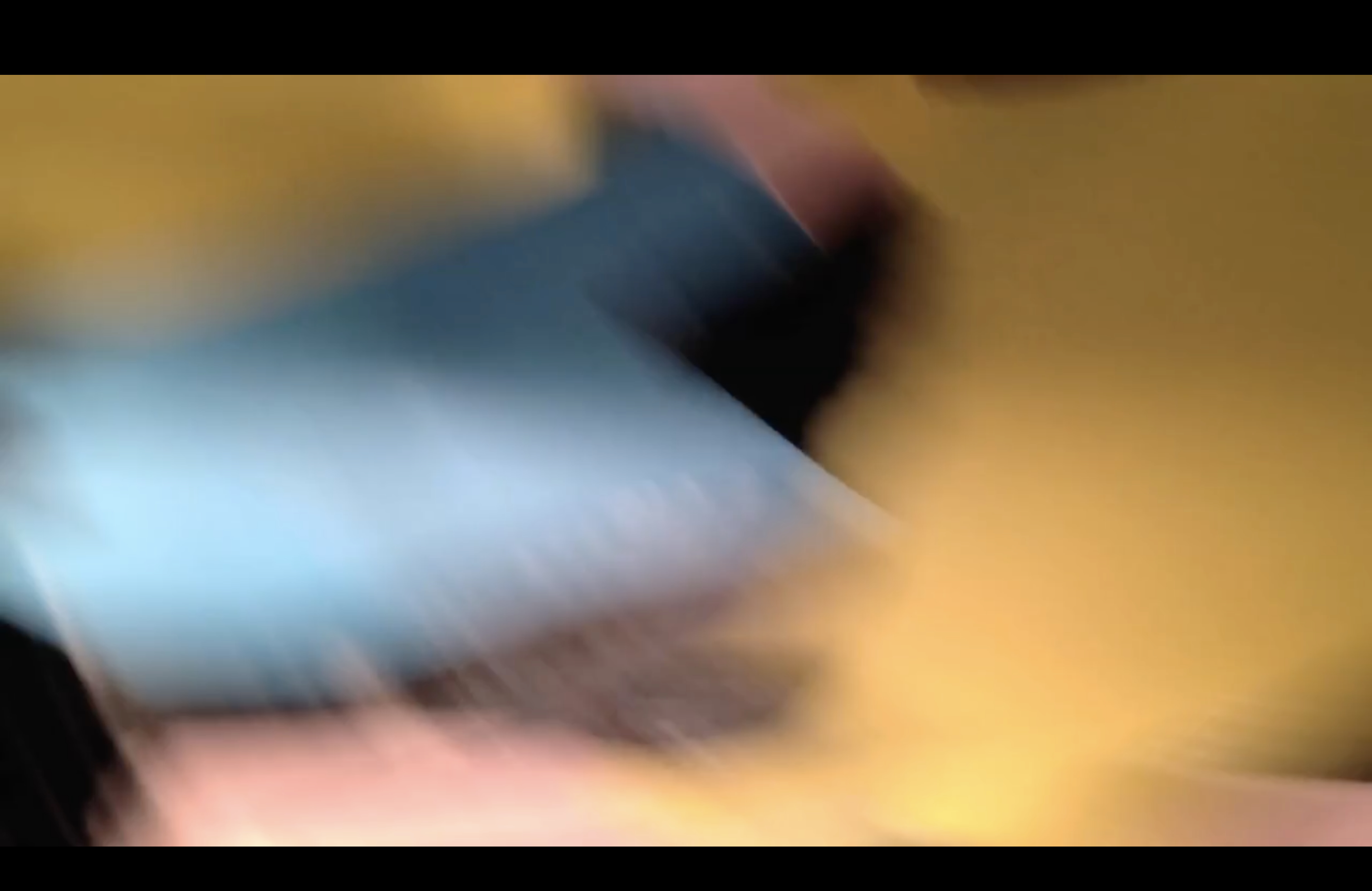
The spectator’s camera co-produces and completes the work, since its subject is the way the camera-phone handles and transforms what it sees. The camera displaces the naked eye, though of course it is also possible to view the holes directly, so that one can get a measure of the startling difference between this and viewing via a video screen. The work could be said to subvert Vertov’s idea of the perfectibility of vision, in that although human vision is in some sense improved by camera technology, it is an imperfect, highly circumscribed image that is proffered here. What is revealed is not the truth of what the camera saw, but the means by which it synthesises something quite distinct and technologically determined. In this light the work can be seen partly as a critique of the triumph of convenience of use (miniaturisation, automation) over fidelity that is characteristic of so much digital technology.
Cabinet is both didactic and revelatory. Didactic in the sense that it offers the chance to learn something by explicit comparison and consideration, and revelatory in its presentation of the dramatic and unexpected phenomena resulting from the camera’s shortcomings. Revelation is also tempered by bafflement, because one realises that it is impossible to grasp the complexities of what one is seeing, let alone what is causing the camera to render what it is seeing as it does. The rolling shutter-firings interact with the rapid rotations of the kinetic objects, generating chaotic, synthetic interactions between vertical sweeps and horizontal rotations, colour processing errors, data handling and mishandling. The work subverts the Kodak Box-Brownie ethos of ‘you push the button, we do the rest’, which has survived to dominate the digital age, with the knowledge that all one has to do with a camcorder in order to create sharp colour images with sync sound, is to switch it on. The way to subvert this loaded starting point from the bottom-up is to insist on some basic considerations that precede this state of affairs, by borrowing from analogue procedures, which have to ask: ‘black and white or colour, sound or silence, focus or blur?’ The top-down way is to expose and undermine the camcorder’s normal functioning by testing its abilities to the limit on its own terms. This latter is Jenkinson’s route in both Cabinet and the more recent work discussed above.
Notes
1. Jamie Jenkinson: http://www.jamiejohnjamesjenkinson.com/.
2. Barry Green: Sensory Artifacts and CMOS Rolling Shutter (nd). Accessed April 14. http://dvxuser.com/jason/CMOS-CCD/.
3. Karim Nice, Tracy V Wilson and Gerald Gurevich: How Digital Cameras Work (nd).
Accessed April 14. http://electronics.howstuffworks.com/cameras-photography/digital/digitalcamera2.htm.
4. Tony Hill: A Short History of the Wheel: https://vimeo.com/17593720.
5. It’s interesting how, in the TV broadcasting world, subjective terms like ‘quality’ are used as if they were technical standards. The most enduring one is ‘broadcast quality’ which has evolved along with the technology, and means nothing more than ‘acceptable by best currently available standards’.
6. Email to the author.
7. Cabinet 1-8: http://www.jamiejohnjamesjenkinson.com/p/cabinet-1-8.html.
 Nicky Hamlyn